
If you live in Southern California and have a pool — or are planning one — the paver material you choose for your pool deck will affect how your backyard looks, feels, and holds up every single day. The wrong choice means burning feet in July, a slippery hazard after every swim, or a surface that turns chalky and stained after two seasons of chlorine exposure.
After more than 20 years supplying hardscape materials to LA contractors and homeowners, we've seen every material succeed and fail in this climate. This guide covers the top pool deck paver options for Southern California, what actually matters in our specific conditions, real installed cost ranges, and the mistakes most homeowners make before they call us.
The short answer: For Southern California pool decks, travertine is the most popular choice for natural cool-to-touch comfort, and porcelain is the best low-maintenance option — especially for saltwater pools. Both beat concrete on nearly every metric that matters in SoCal's climate.
What Actually Matters for a SoCal Pool Deck
Before getting into materials, understand what Southern California's climate specifically demands from a pool deck. These are the factors that separate a good choice from a great one here:
- Heat resistance: Surface temps can exceed 140°F on dark pavers in direct SoCal sun. Light colors and certain materials stay 20–40°F cooler underfoot.
- Slip resistance: Wet bare feet on a smooth surface is a liability. Texture is non-negotiable around any pool.
- Chlorine and chemical resistance: Pool water splashing on pavers and evaporating leaves chemical residue that degrades certain surfaces over time — especially unsealed natural stone.
- UV fading: Southern California's intense sun fades pigments faster than most of the country. Materials that can't hold their color will look washed out within a few seasons.
- Saltwater pool compatibility: Saltwater pools are increasingly common in coastal SoCal. Some materials handle salt exposure far better than others.
- Drainage: Pool decks must slope 1–2% away from the water. Your installer needs to account for this regardless of material.
Travertine Pavers — The Gold Standard for SoCal Pool Decks
Travertine has been the go-to pool deck material in Southern California for good reason. Its natural, porous surface texture provides excellent slip resistance, and more importantly, it reflects heat rather than absorbing it — which means it stays comfortable underfoot even in direct 95°F summer sun.
Why Travertine Works in Southern California
- Stays naturally cool — one of the best materials for barefoot comfort in hot climates
- Natural cleft texture provides built-in slip resistance when wet
- Warm, earthy tones complement both Mediterranean and modern SoCal architecture
- Durable when properly sealed — resists the freeze/thaw that degrades stone in colder climates (not an issue here, but still)
- Highly aesthetic — looks like a resort property
The Honest Downsides
- Requires sealing every 1–2 years to protect against chlorine, acid, and staining
- Acidic substances (citrus drinks, pool chemicals, certain cleaners) can etch the surface
- Higher maintenance commitment than porcelain — if you skip resealing, the surface degrades
- More expensive than concrete pavers upfront
For SoCal pool decks, always specify a tumbled or brushed travertine finish — not honed or polished. Tumbled edges and a textured face dramatically improve slip resistance and give a more natural appearance that ages beautifully in our climate.
Installed cost range: $25–$42 per sq ft in Southern California
Porcelain Pavers — The Low-Maintenance Champion
Porcelain pavers have surged in popularity for SoCal pool decks over the past five years, and for good reason: they require almost zero maintenance, never need sealing, resist chlorine and UV fading better than any natural stone, and can achieve a sleek, contemporary look that contractors love pairing with modern pool designs.
Why Porcelain Excels for Pool Decks
- Zero sealing required — the manufacturing process fires clay at 1,200°C+, creating a surface with less than 0.5% water absorption. No water in means no chemical penetration, no staining, no freeze-thaw damage.
- Chlorine resistant — pool splash and chemical residue don't degrade porcelain's surface the way they can natural stone
- UV-stable color — pigments are baked into the material during firing, not applied on the surface. Colors stay vibrant for 50+ years with no fading
- Excellent for saltwater pools — salt exposure that gradually degrades concrete and requires extra sealing on travertine has virtually no effect on porcelain
- Textured options achieve R11 slip resistance — specifically designed for wet-area safety
The Trade-offs
- Higher upfront material cost than travertine or concrete
- Requires professional installation — dense material needs diamond-blade wet saws and precise substrate preparation
- Less "warm" aesthetic than natural stone for homeowners who prefer an organic look
- Some smooth porcelain finishes can be slippery — always specify textured for pool areas
Installed cost range: $28–$45 per sq ft in Southern California
Concrete Pavers — The Budget Option
Concrete pavers are the most affordable pool deck option and are widely installed throughout Southern California. They can look great when first installed — especially with a textured finish — and they're flexible enough to shift with the ground movement common in our seismic zone without cracking the way a solid concrete slab would.
Where Concrete Pavers Work
- Budget-conscious projects where initial cost matters most
- Large surface areas where material savings add up significantly
- Projects where you plan to replace or update the patio in 15–20 years anyway
Where Concrete Pavers Struggle in SoCal
- Heat absorption: Concrete absorbs and holds heat. Dark concrete pavers can reach temperatures that burn bare feet. Stick to light colors if choosing concrete for a pool deck.
- UV fading: Surface pigments break down under intense SoCal sun. Noticeable fading typically begins within 5–7 years without regular sealing.
- Chlorine damage: Pool splash gradually degrades unsealed concrete surfaces, creating a rougher, more porous texture that stains more easily over time.
- Sealing required: Must be sealed on installation and resealed every 2–5 years — add this to your lifetime ownership cost.
Installed cost range: $22–$32 per sq ft in Southern California
Other Options Worth Knowing
Flagstone & Slate
Natural flagstone and slate provide excellent slip resistance from their cleft, irregular surfaces and stay relatively cool underfoot. They're beautiful in the right setting — especially for more organic, garden-style pools. The downside is higher labor cost due to irregular sizing and the need for skilled installation. Expect $30–$50+ per sq ft installed when factoring in the labor premium.
Limestone
Limestone pavers offer a clean, light aesthetic — popular in Mediterranean-influenced SoCal homes. They're durable and weather-resistant but porous, requiring regular sealing and care around acidic pool chemicals. A solid mid-range option at $25–$40 per sq ft installed.
Head-to-Head Comparison
| Feature | Travertine | Porcelain | Concrete |
|---|---|---|---|
| Cool to Touch | ⭐⭐⭐⭐⭐ Excellent | ⭐⭐⭐⭐ Good | ⭐⭐ Poor (absorbs heat) |
| Slip Resistance | ⭐⭐⭐⭐⭐ Natural texture | ⭐⭐⭐⭐⭐ R11+ (textured) | ⭐⭐⭐ Varies by finish |
| Chlorine Resistance | ⭐⭐⭐ Good (when sealed) | ⭐⭐⭐⭐⭐ Excellent | ⭐⭐ Degrades over time |
| UV Fading | ⭐⭐⭐⭐ Low (natural stone) | ⭐⭐⭐⭐⭐ No fading | ⭐⭐ Noticeable in 5–7 yrs |
| Maintenance | ⭐⭐⭐ Seal every 1–2 yrs | ⭐⭐⭐⭐⭐ Rinse only | ⭐⭐ Seal every 2–5 yrs |
| Saltwater Pools | ⭐⭐⭐ OK (extra sealing) | ⭐⭐⭐⭐⭐ Ideal | ⭐⭐ Salt accelerates wear |
| Installed Cost (SoCal) | $25–$42/sq ft | $28–$45/sq ft | $22–$32/sq ft |
| Lifespan | 25–40+ yrs | 50–70+ yrs | 15–30 yrs |
The 6 Biggest Mistakes SoCal Homeowners Make
- Choosing dark pavers. They look stunning in photos but can reach temperatures that blister feet in July. Always go light or medium tones for a Southern California pool deck.
- Picking polished or honed finishes. Elegant in dry settings, dangerously slippery when wet. Tumbled, textured, or brushed finishes are mandatory for pool areas.
- Skipping the sealing schedule on travertine. One missed sealing cycle allows chlorine residue and stains to penetrate. Set a calendar reminder — it's a two-hour job that protects a major investment.
- Not planning for drainage. A proper 1–2% slope away from the pool is code-required and structurally essential. Poor drainage leads to water pooling, erosion, and paver settlement.
- Installing over existing concrete. Pavers cannot simply be laid over an existing concrete slab without proper evaluation. The old surface usually needs to be removed or properly prepped — don't let any contractor skip this step.
- Choosing the cheapest installer. Base preparation accounts for 80% of how long your pool deck lasts. A properly compacted base, correct joint sand, and edge restraints are as important as the paver material itself.
HOA Considerations in Southern California
If your home is in an HOA community, be aware that most associations in SoCal require design review board approval before any exterior hardscape work. Approval timelines typically run 2–8 weeks. California Civil Code §4735 protects your right to use drought-resistant landscaping alternatives, and pavers fall under that protection in most interpretations — but always check your specific CC&Rs first.
Frequently Asked Questions
What is the best paver for a pool deck in Southern California?
Travertine and porcelain are the top choices for SoCal pool decks. Travertine stays naturally cool underfoot and is slip-resistant but requires sealing every 1–2 years. Porcelain is virtually maintenance-free, resists chlorine and UV fading, and is ideal for saltwater pools. Both outperform concrete in the Southern California climate.
Do pavers get hot around a pool in Southern California?
Yes — paver color and material both affect surface temperature. Light-colored travertine and porcelain stay significantly cooler than dark concrete in SoCal's direct summer sun. Light pavers can be 20–40°F cooler than dark ones, making color selection critical for barefoot comfort.
How much does it cost to pave a pool deck in Southern California?
Pool deck paver installation in Southern California typically ranges from $22–$45+ per square foot installed, depending on material. Concrete pavers run $22–$32/sq ft, travertine $25–$42/sq ft, and porcelain $28–$45/sq ft. Custom coping, drainage work, and tight access can push costs higher.
Are pavers slippery around a pool?
Smooth or polished pavers can be slippery when wet. For pool decks, always choose textured, tumbled, sandblasted, or brushed finishes. Travertine's natural porous texture and textured porcelain with R11+ slip ratings are among the safest choices for wet pool environments.
Does chlorine damage pool deck pavers?
Chlorinated water that drips and evaporates leaves chemical residue that can degrade certain paver surfaces over time. Unsealed travertine is especially vulnerable. Porcelain is the most chlorine-resistant option. For travertine, seal every 1–2 years to protect against chemical damage.
Ready to Choose Your Pool Deck Pavers?
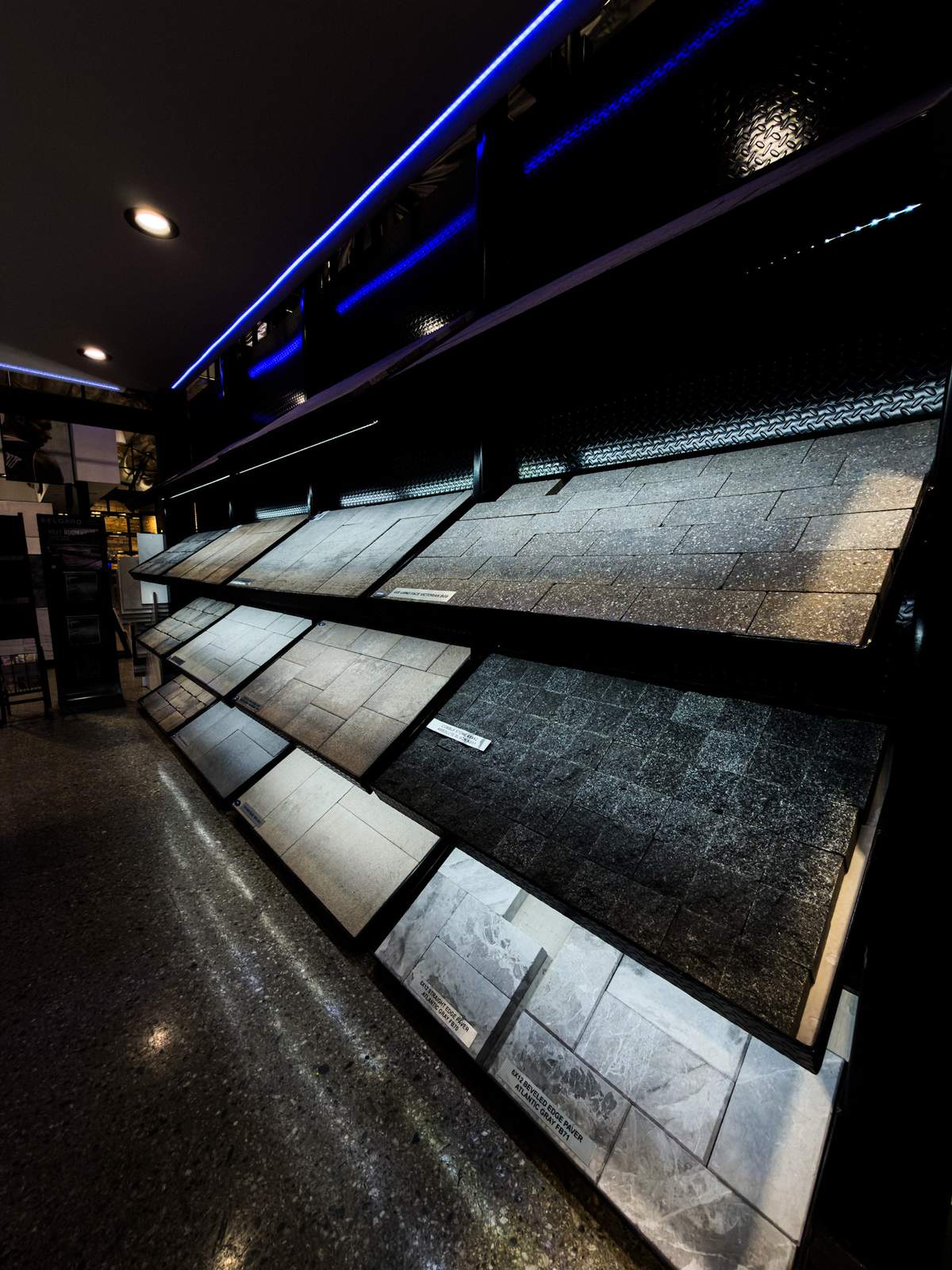
Visit our North Hollywood showroom to see travertine, porcelain, and concrete pavers side-by-side — in real light, at real scale. Our team helps contractors and homeowners across Los Angeles find the right material every day.
Visit the Showroom Get a Free Quote Call (818) 503-4242