It's one of the most common questions we get at our North Hollywood yard: "Should I go with porcelain or concrete pavers?" The honest answer is that both are excellent products — but they're right for very different situations, budgets, and priorities.
Concrete pavers have been the backbone of hardscape in Los Angeles for decades. Porcelain pavers are a newer category that's gained significant traction among contractors and homeowners who want a sleeker look and near-zero maintenance. This guide lays out the real differences — not the marketing version, but the practical contractor-level comparison that helps you make the right call for your specific project.
How They're Made — And Why It Matters
The performance differences between porcelain and concrete pavers come directly from how they're manufactured, so this is worth understanding before jumping to price comparisons.
Porcelain Manufacturing
Porcelain pavers are made from refined natural clays and minerals compressed under enormous pressure and then fired in kilns at temperatures exceeding 1,200°C. At that temperature, the clay particles vitrify — they melt and bond together into a glass-like matrix that is extraordinarily dense and non-porous. The color pigments are baked directly into the material during firing, which means they literally cannot fade or wash out the way surface-applied pigments do.
The result: water absorption of less than 0.5% (verified by ANSI A137.1 and ASTM C373 standards). That one number explains virtually every performance advantage porcelain has over concrete.
Concrete Manufacturing
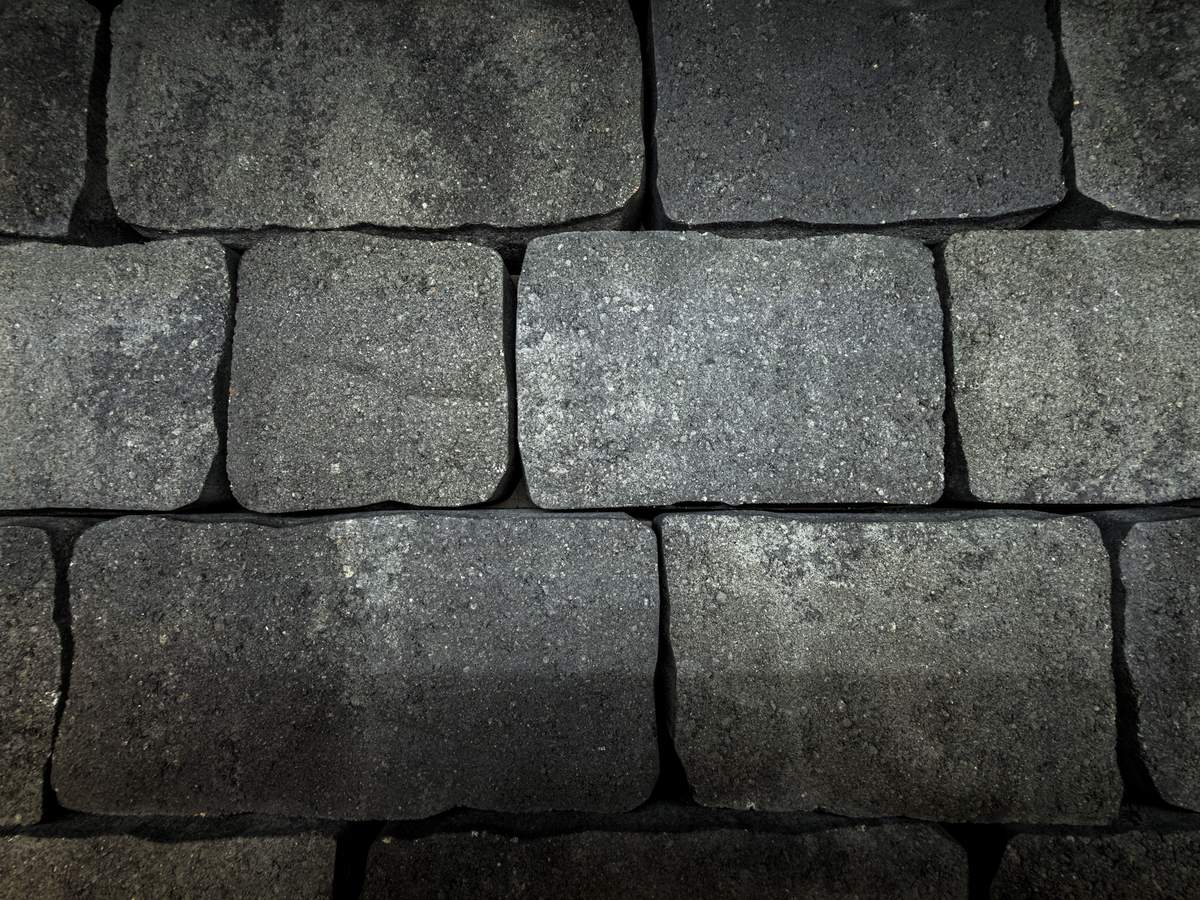
Concrete pavers are made from a blend of cement, sand, aggregate, and mineral pigments mixed together, poured into molds, and cured at room temperature. It's a simpler process — which is why concrete pavers cost less and are so widely available. But that porous, cured-concrete structure absorbs water (typically 5–20% water absorption depending on the mix). That water absorption is the root of most concrete paver problems: UV fading, freeze-thaw cracking, chlorine damage, and staining.
The key difference in one sentence: Porcelain is essentially a glass-ceramic product with water absorption under 0.5%. Concrete is a porous cementitious product with water absorption up to 20%. That gap drives every performance comparison that follows.
Durability — How Long Will They Actually Last?
This is where porcelain's manufacturing advantage translates most clearly into real-world outcomes.
Porcelain Pavers
Porcelain pavers have a demonstrated lifespan of 50–70+ years in outdoor conditions. Many manufacturers back them with lifetime residential warranties and 10-year commercial warranties. Because the surface doesn't absorb water, it's immune to the freeze-thaw damage that cycles can inflict on porous materials — porcelain remains frost-proof even at temperatures as low as -60°F. Oil, grease, wine, acids, and pool chemicals that would permanently stain concrete leave no trace on a properly maintained porcelain surface.
Concrete Pavers
Concrete pavers installed properly and maintained with regular sealing typically last 20–50 years. In Southern California's relatively mild climate, well-maintained concrete pavers can reach the upper end of that range. But the key phrase is "regularly maintained" — UV fading becomes noticeable within 5–7 years without sealing, and staining from oils, pool chemicals, or organic matter penetrates the porous surface and is extremely difficult to reverse completely.
🏆 Porcelain — Durability Winner
50–70+ year lifespan, no fade, no staining, frost-proof, chemical resistant. Significantly outperforms concrete over a full ownership horizon.
Concrete — Still Solid
20–50 years with maintenance. Proven track record over decades. Works well when properly sealed and cared for. More forgiving installation tolerances.
Cost — Upfront vs. Lifetime
This is where most homeowners focus — and where the comparison gets more nuanced than a simple price-per-square-foot.
Upfront Installed Cost
- Concrete pavers: $2–$8/sq ft material + $10–$20/sq ft labor + base materials = $12–$40/sq ft installed
- Porcelain pavers: $7–$14/sq ft material + $5–$25/sq ft labor = $12–$25+/sq ft installed
At first glance these ranges overlap significantly. The real cost difference shows up in large projects where porcelain's higher material cost adds up — and in the quality of contractor you need (porcelain requires more precise installation, so labor tends to run on the higher end).
Lifetime Cost — The Full Picture
Concrete pavers require professional sealing within 6–12 months of installation and then every 2–5 years thereafter. That's 5–8 sealing applications over a 30–50 year ownership period at $1–$3 per square foot per application. On a 1,000 sq ft patio, that's $5,000–$24,000 in sealing costs over the life of the surface — before accounting for any repairs or replacements.
Porcelain requires zero sealing applications. Ever. That zero-maintenance cost profile makes porcelain's lifetime cost-per-year significantly lower than concrete in most scenarios:
- Porcelain at $20/sq ft ÷ 60 years = ~$0.33/sq ft/year
- Concrete at $25/sq ft + $15/sq ft in sealing over 35 years ÷ 35 years = ~$1.14/sq ft/year
If initial cost is the primary constraint, concrete is the smart choice — especially for large projects. If you're optimizing for lowest total cost over time, porcelain almost always wins on a per-year basis because of eliminated maintenance costs.
Maintenance — The Day-to-Day Reality
Porcelain Pavers — Minimal
Porcelain pavers require no sealing, no special cleaning products, and no annual treatments. Routine maintenance is sweeping off debris and an occasional rinse with water or diluted dish soap. That's genuinely it. The non-porous surface resists mold and moss growth, doesn't stain from typical outdoor spills, and can withstand de-icing salts in colder climates without surface damage.
Concrete Pavers — More Involved
Concrete paver maintenance includes initial sealing, periodic resealing (every 2–5 years), regular sweeping and rinsing to prevent staining, potential pressure washing for deep cleaning, and addressing any weed growth in joints. If a sealing cycle is missed, stains from oil, food, or pool chemicals can penetrate and become permanent. With consistent care, concrete pavers look great — it just requires commitment.
Best Use Cases — Where Each Shines
| Application | Best Choice | Why |
|---|---|---|
| Pool Decks | Porcelain | Slip-resistant (R11+), chlorine-proof, no sealing, handles saltwater pools |
| Modern Patios | Porcelain | Clean aesthetic, large format options, zero maintenance, no fading |
| Traditional Patios | Concrete | Classic look, herringbone/brick patterns, wide color options, cost-effective |
| Driveways | Both | Concrete is proven standard; porcelain resists oil staining better but costs more |
| Walkways | Both | Concrete widely used and budget-friendly; porcelain great for high-end look |
| Large Commercial Areas | Concrete | Material cost savings significant at scale; easier repairs |
| Seismic / Shifting Soil (SoCal) | Both | Interlocking pavers of both types flex with ground movement better than poured concrete |
| Install Over Existing Concrete | Porcelain | Can be installed as overlay in some applications; concrete pavers typically cannot |
Slip Resistance — A Critical Factor
This question comes up most often for pool decks and entryways, but slip resistance matters on any outdoor surface. The answer here isn't "porcelain vs. concrete" — it's about finish selection within each material.
Textured porcelain achieves R11 slip resistance ratings per the DIN 51130 standard, which qualifies it for pool decks and wet commercial areas. That same standard requires R9 minimum for residential walkways and R10 for commercial ones. Smooth or polished porcelain — while stunning in interior applications — can be dangerously slippery when wet and is not appropriate for pool decks or high-moisture outdoor areas.
Concrete pavers similarly range from highly textured (safe) to fairly smooth (potentially slippery). The finish you specify matters as much as the material type. For any pool deck or wet-area application, always specify a textured, brushed, tumbled, or sandblasted finish regardless of which material you choose.
Installation — What Each Requires
Concrete Pavers
Concrete pavers are thicker (typically 2–3 inches) and more forgiving on substrate tolerances. They can be cut with standard diamond-blade saws and in some cases with chisel and mallet. DIY installation is feasible for experienced homeowners on simpler projects. The thicker profile means the base preparation process is similar to traditional paving, and most hardscape contractors have extensive experience with it.
Porcelain Pavers
Porcelain pavers require more precision. The material is extremely dense and must be cut with professional-grade wet saws fitted with diamond blades — cheap blades will chip or shatter the tile. Thinner profiles (typically 3/4" to 1.2") require a more meticulously prepared, level substrate. This is not a DIY-friendly material for most homeowners, and it's worth paying for a contractor with demonstrated porcelain paver experience specifically.
When getting quotes for porcelain paver installation, ask specifically how many porcelain paver projects the contractor has completed. Installation technique that works perfectly for concrete pavers doesn't always translate to porcelain — proper bedding, adhesive, and cutting equipment matter significantly.
The Verdict — How to Choose
Choose porcelain if: You want zero long-term maintenance, you have a pool deck or saltwater pool, you're designing a contemporary/modern space, or you're optimizing for total cost of ownership over 20+ years.
Choose concrete if: Initial budget is the primary constraint, you're doing a large-scale project where material costs add up fast, you prefer a traditional or rustic aesthetic, or you want the flexibility of easy DIY repairs.
Both are excellent products — and both are available at our North Hollywood location. Our team can show you samples side-by-side and help you weigh the trade-offs for your specific project conditions.
Frequently Asked Questions
How long do porcelain pavers last?
Porcelain pavers last 50–70+ years with minimal maintenance. Many manufacturers offer lifetime residential warranties. Their non-porous surface resists staining, UV fading, frost damage, and chemical exposure, making them one of the longest-lasting paver options available.
Do porcelain pavers need sealing?
No — never. The manufacturing process fires clay at over 1,200°C, creating a surface with less than 0.5% water absorption. This non-porous surface naturally resists stains, mold, and chemical damage without any sealant. This is one of porcelain's biggest advantages over concrete.
Are porcelain pavers more expensive than concrete?
Porcelain typically costs more upfront — $12–$25+ per square foot installed vs $12–$40/sq ft for concrete. However, porcelain's zero maintenance requirement and 50–70 year lifespan make it significantly cheaper per year of ownership when you factor in concrete's resealing costs every 2–5 years.
Are porcelain pavers slippery when wet?
Not if you choose the right finish. Textured porcelain pavers achieve R11 slip resistance ratings (DIN 51130 standard), making them safe for pool decks and wet areas. Smooth or polished porcelain can be slippery — always specify textured finishes for any wet-area application.
Which is better for a driveway — porcelain or concrete pavers?
Both work well for driveways. Concrete is the traditional, cost-effective choice. Porcelain handles vehicle loads up to 2,000 lbs and resists oil staining better than concrete, but requires more precise installation. For high-end driveways where appearance and longevity matter most, porcelain is the stronger long-term investment.
How often do concrete pavers need to be sealed?
Concrete pavers should be sealed within 6–12 months of installation, then resealed every 2–5 years depending on traffic, sun exposure, and the type of sealer used. Skipping sealing accelerates UV fading, staining, and chemical damage to the surface.
See Both Side by Side at Our Showroom
Nothing beats seeing porcelain and concrete pavers in person — in real light, at real scale. Visit our 5,000 sq ft showroom in North Hollywood and our team will walk you through the options for your specific project.
Visit the Showroom Get a Free Quote Call (818) 503-4242