
Last Updated: April 2026
Hardscape is the foundation of outdoor design in Los Angeles. Whether you're a contractor bidding on a major project, a homeowner planning a patio, or a landscaper sourcing materials for your next job, understanding the different material types, costs, and performance characteristics is essential. The Los Angeles climate — intense sun, rare but heavy winter rains, and significant UV exposure — demands materials that can handle the environment and still look great after 5, 10, 20 years.
This guide covers all the major hardscape material types used in Los Angeles, when to use each one, realistic pricing for 2026, and exactly where to find wholesale inventory. Whether you're choosing between pavers and stone, deciding between concrete and brick, or figuring out if decorative rock is the right call, you'll find practical advice based on real project experience across the San Fernando Valley and greater LA area.
The 7 Main Hardscape Material Types
Hardscape breaks down into seven primary material categories. Each has distinct cost, durability, maintenance requirements, and aesthetic profiles:
1. Concrete Pavers
Concrete pavers are the workhorse of LA hardscape. They're durable, affordable, widely available, and can be manufactured in virtually any size, color, and pattern. A 400 sq ft patio in standard grey concrete pavers might cost $8–$12 per square foot installed. Concrete holds up well through LA's climate and, when sealed, resists staining and UV fading better than unsealed concrete slab.
Best uses: driveways, patios, pathways, commercial applications, budget-conscious residential projects. Skip concrete pavers if you want a natural stone aesthetic or premium look — porcelain or travertine are better choices.
2. Porcelain Pavers
Porcelain pavers are the premium paver choice in Los Angeles right now. They're non-porous (no sealing needed), available in designs that mimic natural stone, extremely durable (50+ year lifespan), and perform beautifully in high-traffic and pool deck applications. Material cost runs $8–$15 per square foot, installed $20–$40 per square foot depending on complexity. Yes, they're more expensive than concrete, but the lack of maintenance makes them cost-competitive over 10+ years.
Best uses: high-end patios, pool decks, driveways in upscale neighborhoods, commercial spaces where maintenance is a concern. They're ideal for contractors who want to eliminate call-backs about staining and maintenance.
3. Natural Stone (Travertine, Flagstone, Slate)
Natural stone brings timeless elegance to any hardscape project. Travertine is the most popular natural stone in LA, especially for pool decks. Flagstone and slate offer rustic charm and varied color palettes. Material costs range $5–$10 per square foot (travertine) to $8–$15 per square foot (flagstone, slate). Installed costs typically run $20–$50 per square foot including the professional installation these materials demand.
Trade-offs: Natural stone requires regular sealing (every 1–2 years), is more fragile than pavers (can crack under excessive point loads), and needs proper base preparation. But for Mediterranean, Craftsman, and contemporary homes in LA, nothing beats the look.
Best uses: pool decks, upscale patios, luxe driveways, rustic pathways, any project where aesthetics are the priority. See our full guides: Travertine Pavers Guide → and Flagstone Guide →
4. Brick Pavers (Clay & Concrete)
Clay brick brings warmth and texture to hardscape. Concrete brick mimics the look of clay at lower cost. Material cost ranges $4–$8 per square foot for quality brick, installed $15–$35 per square foot depending on pattern complexity and base prep. Brick's smaller modular format allows intricate patterns (herringbone, basket weave, running bond) that larger pavers can't match.
Best uses: residential driveways, courtyards, patios with classic aesthetics, any project where pattern and visual interest matter. See our full Brick Pavers Guide →
5. Permeable & Pervious Pavers
Permeable pavers allow water to drain through, reducing runoff and supporting sustainable design. They're increasingly required by LA municipal codes for new hardscape. Options include concrete grid pavers (grass infill), permeable concrete, and recycled plastic systems. Material cost ranges $6–$12 per square foot, installed $18–$40 per square foot. Higher cost than standard pavers but increasingly offset by municipal compliance and long-term stormwater benefit.
Best uses: residential driveways under new building codes, commercial sustainability projects, municipalities with stormwater requirements. Not ideal for high-traffic areas where grass infill gets worn.
6. Decorative Rock & Gravel
Decorative rock (crushed granite, pea gravel, river rock, colored stone) is the lowest-cost hardscape option — typically $3–$8 per square foot installed. Rock requires no sealing or maintenance beyond occasional raking and top-dressing. It's ideal for xeriscaping, modern minimalist landscapes, and budget projects.
Trade-offs: Rock displaces over time (spreads into adjacent areas, gets tracked onto patios), requires periodic replacement (add a layer every 1–2 years), and doesn't handle heavy foot traffic well. Not suitable for driveways, high-traffic patios, or any area where you need a hard walking surface.
Best uses: landscape beds, pathway borders, xeriscaped yards, modern minimalist courtyards, under decks. See our full Decorative Rock Guide →
7. Precast Concrete (Steps, Pavers, Retaining Walls)
Precast concrete offers engineered products for specific applications — stairs, retaining wall blocks, decorative wall caps, and specialty pavers. Cost varies widely: $4–$12 per square foot for precast pavers, $15–$50+ per linear foot for stairs depending on complexity. Precast is durable, available in standard sizes, and requires minimal labor on-site.
Best uses: residential and commercial stairs, retaining wall systems, pool surrounds, any hardscape that requires engineering or structural integrity. See our Precast Products →
Material Comparison Table
| Material Type | Material Cost / Sq Ft | Installed Cost / Sq Ft | Durability | Maintenance | Best For |
|---|---|---|---|---|---|
| Concrete Pavers | $2.50–$5.00 | $12–$18 | 25–40 years | Seal every 2–3 years | Budget patios, driveways |
| Porcelain Pavers | $8–$15 | $20–$40 | 50+ years | None required | Premium patios, pool decks |
| Travertine | $3.50–$8.00 | $18–$35 | 30–50+ years | Seal every 1–2 years | Pool decks, luxury patios |
| Flagstone / Slate | $8–$15 | $25–$50 | 30–50+ years | Seal every 1–2 years | Rustic patios, walkways |
| Brick (Clay / Concrete) | $4–$8 | $15–$35 | 25–50+ years | Seal every 2–3 years | Pattern patios, driveways |
| Permeable Pavers | $6–$12 | $18–$40 | 20–40 years | Moderate (grass maintenance) | Compliant driveways, eco projects |
| Decorative Rock | $1–$3 | $3–$8 | Variable (needs topping) | Annual topping, raking | Xeriscaping, borders, accents |
| Precast Concrete | $4–$12 | $12–$25 | 30–50+ years | Minimal | Stairs, walls, specialty items |
Choosing the Right Material for Your Project
Before picking a material, ask three questions: (1) What's the budget? (2) What's the maintenance tolerance? (3) What's the aesthetic priority? Budget projects with low maintenance tolerance = concrete or porcelain. Premium projects with willingness to maintain = natural stone. Eco-conscious = permeable systems. Budget xeriscaping = decorative rock.
For Driveways
Top choices in order of performance: (1) Porcelain pavers — zero maintenance, 50+ year lifespan, premium look. (2) Concrete pavers — good durability, affordable, requires occasional sealing. (3) Travertine or natural stone — beautiful but needs regular sealing and can crack under heavy loads. Avoid: Thin decorative rock (gets tracked, displaces under tires).
For Patios & Outdoor Living
Material choice here is driven by aesthetic. High-end Mediterranean or Spanish Colonial = natural stone (travertine, flagstone). Contemporary = porcelain or polished concrete. Traditional = brick. Budget-conscious = concrete pavers. Don't underestimate the impact of color and texture on how a space feels — see materials in person before buying.
For Pool Decks
Non-negotiables: slip resistance (tumbled or brushed finish for natural stone, textured for pavers), heat absorption (lighter colors stay cooler), and water drainage (avoid polished finishes). Top choices: travertine (classic, cool underfoot, naturally slip-resistant), porcelain (zero maintenance, modern look), or textured concrete pavers (budget option).
For Walkways & Pathways
Flagstone or slate for rustic charm. Travertine for elegant simplicity. Decorative rock for borders and accents. Concrete pavers for utility and cost-effectiveness. Permeable options if codes require it.
Contractor vs DIY: Installation Realities
Real talk: Hardscape installation looks simple (lay stones, fill joints) but isn't. Improper base prep causes settling, cracking, and failed projects within 2–3 years. A proper base requires 4–6 inches of compacted aggregate, a sand bed, proper slope for drainage, and edge restraint. Cut corners, and you'll be explaining to homeowners why their patio is sinking.
DIY is viable if: You're willing to rent a compactor, learn proper base prep, and take your time (a small patio takes a weekend or two). Concrete and decorative rock are the easiest materials. Stone and pavers with patterns are harder.
Hire a contractor if: The project is larger than 200 sq ft, the area has poor drainage, you need a specific pattern, or it's a visible area of your home. Professional installation costs more but carries warranty and guarantees proper drainage — critical for LA's occasional heavy rains.
Sourcing Materials in Los Angeles
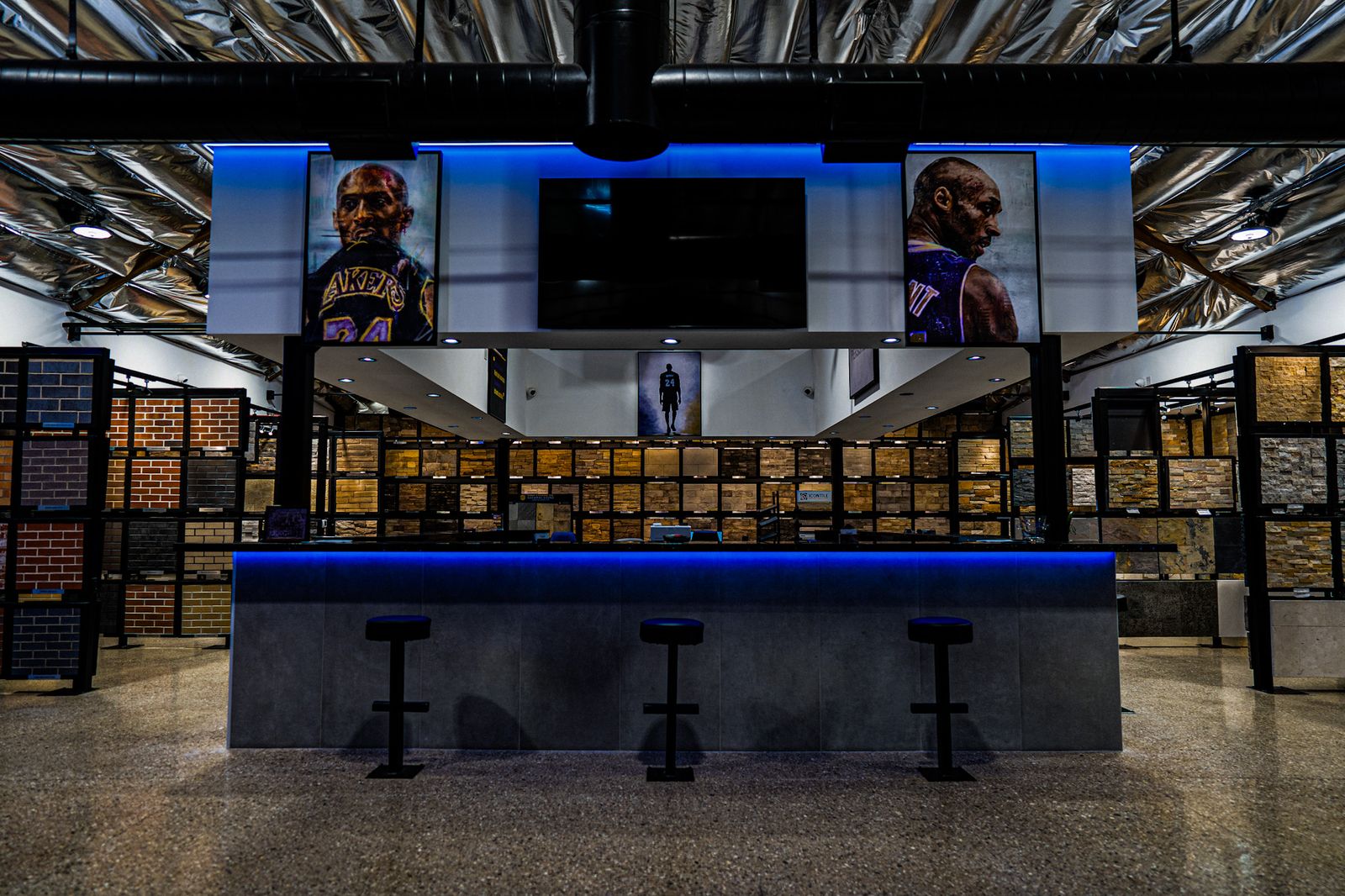
The Los Angeles area has several landscape supply yards. Prime Building Materials (North Hollywood) stocks all major material types at wholesale prices — pavers (concrete, porcelain, clay), natural stone (travertine, flagstone, slate), precast items, and decorative rock. They sell directly to homeowners, contractors, and landscapers. Call (818) 503-4242 to check availability or visit in person: 6900 Lankershim Blvd, North Hollywood, Mon–Fri 7am–5pm, Sat 7am–2pm.
Pro tip: Order full pallets from a wholesale supplier and have your contractor install them. You'll avoid retail markups (15–30% on materials) and get better pricing per square foot on large projects.
Cost Breakdown Example: 400 Sq Ft Patio
Here's what a realistic 400 sq ft patio budget looks like in Los Angeles for various material choices, including material and professional installation:
- Concrete Pavers (grey, standard): Materials $1,200–$1,600 + Labor $1,600–$2,400 = Total $2,800–$4,000 ($7–$10/sq ft installed)
- Brick Pavers (herringbone pattern): Materials $1,600–$2,400 + Labor $2,000–$3,200 = Total $3,600–$5,600 ($9–$14/sq ft installed)
- Travertine Stone (tumbled, 16×16): Materials $1,800–$3,000 + Labor $2,400–$4,000 = Total $4,200–$7,000 ($10–$17.50/sq ft installed)
- Porcelain Pavers (natural stone look): Materials $3,200–$5,200 + Labor $2,400–$4,000 = Total $5,600–$9,200 ($14–$23/sq ft installed)
- Decorative Rock (crushed granite, 4" depth): Materials $600–$800 + Labor $400–$800 = Total $1,000–$1,600 ($2.50–$4/sq ft installed)
Prices vary significantly by location within LA, base conditions, and contractor. Always get multiple bids and understand what's included (base prep, grading, sealing, etc.).
If your budget is under $2,500 for a 400 sq ft area, concrete pavers or rock are your only real options. If budget is $5,000+, you have choices across all material types. Don't try to force a high-end material on a tight budget — it never ends well.
Maintenance Schedule by Material
Here's what you need to do each year to keep hardscape looking good in Los Angeles:
- Porcelain Pavers: Rinse with water 2–3 times per year. No sealing. Occasional weed control. Virtually maintenance-free.
- Concrete Pavers: Rinse 2–3 times yearly. Seal every 2–3 years. Remove weeds from joints. Minor power washing acceptable.
- Natural Stone (Travertine, Flagstone, Slate): Rinse regularly, especially around pools. Seal every 1–2 years. Avoid acidic cleaners. Address spills immediately.
- Brick Pavers: Similar to concrete pavers. Seal every 2–3 years. Joint maintenance every 3–5 years. Avoid harsh cleaning agents.
- Decorative Rock: Rake annually, top-dress with new rock every 1–2 years (typically 2–4 cubic yards per 400 sq ft). Remove debris and fallen leaves regularly.
- Precast Concrete: Minimal maintenance. Rinse occasionally. No sealing required unless specified by manufacturer.
Ready to Order Hardscape Materials?
Prime Building Materials stocks all major hardscape types at wholesale pricing in North Hollywood. See samples in person, get accurate pricing, and order direct.
Visit Showroom → Get a Free Quote →Call (818) 503-4242 · 6900 Lankershim Blvd, North Hollywood · Mon–Fri 7am–5pm, Sat 7am–2pm
Hardscape Materials FAQ
What are the main hardscape material types in Los Angeles?
The main hardscape materials are: concrete pavers, porcelain pavers, natural stone (travertine, flagstone, slate), clay and concrete brick, permeable pavers, decorative rock, and precast concrete. Each offers different cost, durability, aesthetics, and maintenance profiles. Choice depends on project type, budget, and aesthetic goals.
How much does hardscape installation cost per square foot in LA?
Total installed costs typically run $3–$50+ per square foot depending on material. Concrete: $8–$15/sq ft. Pavers: $12–$35/sq ft. Natural stone: $20–$50/sq ft. Rock: $3–$8/sq ft. Always budget for proper base prep (4–6 inches compacted aggregate), which is essential for preventing settling and drainage issues.
What's the best hardscape material for a driveway in Los Angeles?
Top choices are: porcelain pavers (most durable, zero maintenance), concrete pavers (affordable, good durability), and travertine or natural stone (premium look). Avoid thin decorative rock on driveways. Porcelain and concrete handle vehicle loads best and last 30–50+ years with minimal maintenance.
Do I need to seal hardscape materials in Los Angeles?
Sealing requirements vary by material. Natural stone (travertine, flagstone) needs sealing every 1–2 years. Concrete pavers benefit from sealing every 2–3 years. Porcelain pavers require no sealing. Decorative rock doesn't need sealing. LA's dry climate helps with maintenance compared to wetter regions.
Where can I buy hardscape materials wholesale in Los Angeles?
Prime Building Materials stocks all major hardscape materials at wholesale pricing at 6900 Lankershim Blvd, North Hollywood. They carry pavers, natural stone, brick, block, decorative rock, and precast. Call (818) 503-4242 Monday–Friday 7am–5pm, Saturday 7am–2pm, or visit in person.
What's the difference between contractor-grade and homeowner-grade materials?
Contractor-grade materials have higher quality, consistent sizing, stricter color standards, and better performance. Homeowner-grade may have more color variation and sizing tolerance. For professional results, always specify contractor-grade. Wholesale suppliers like Prime Building Materials sell contractor-grade directly to homeowners and contractors.